Many incredible actions happened on D-day. One of the most famous is the attack on Pointe du Hoc by three companies of the second Ranger battalion. An amazing part of the Pointe du hoc action had nothing to do with Rangers.
The 101st US airborne were landing behind Utah beach 12 miles away, as the crow flies, from Pointe du Hoc. It was going to take 6 days to close the gap between Omaha and Utah beaches.
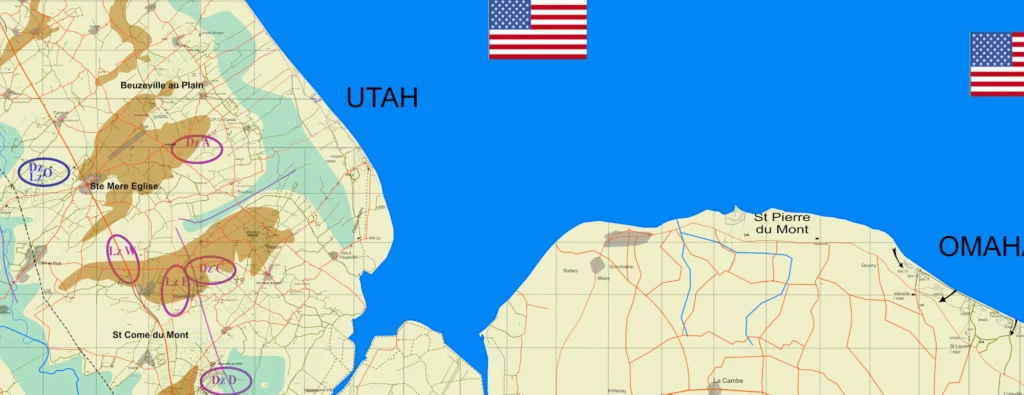
Arriving from the West, the C47 piloted by 2nd Lt Zeuner, with 19 paratroopers, had crossed right over the peninsula in heavy Flak and had been hit. Lt Floyd Johnson saw they were over the Channel and shouted to the pilot to take them back. The pilot didn’t turn right round, but changed course to cross the coast near St Piere du Mont. Pfc Christensen told Len Goodgal that the right hand engine was on fire, causing the wing to drop. The plane went into a dive then started to climb as the green light went on. 4 men managed to jump, with flak passing near them, before the plane crashed into the Channel.
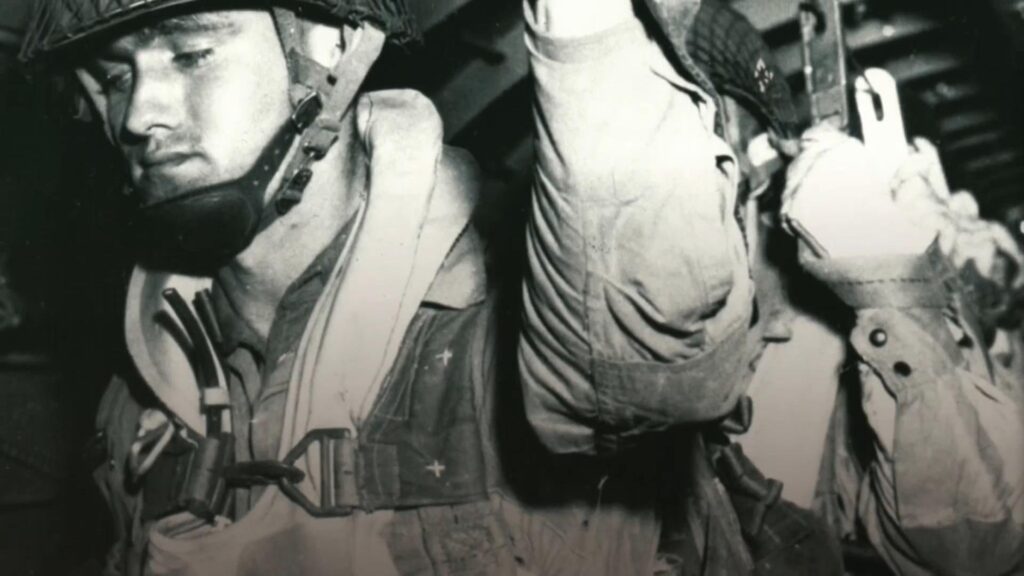
Lt Johnson and Christenson actually landed in the Pointe du Hoc battery.
Len Goodgal saw he was heading to land in the sea. He ditched his leg bag and any thing else he could get rid of. He saw the plane crash into the sea. Goodgal landed in shallow water. He waded to the shore but was completely lost. Then he heard someone calling. It was Pvt Raymond Crouch. They didn’t know where they were, except that they were at the bottom of sheer cliffs that they couldn’t climb. They decided to go West.
As dawn was breaking, they saw landing craft coming from the east along the coast. Goodgal waved at them but they didn’t stop. it was the Rangers heading to Pointe du Hoc after having gone off course towards Point de Raz.
As they approached the headland, they came under fire. They hadn’t trained to scale the cliffs but they could help by treating the wounded. Crouch tried to retrieve first aid kits from the landing craft but the fire from the cliff top was too intense. Coodgal remembers the destroyer Saterlee firing on the Germans to assist the attack. THe British destroyer HMS Talybont was firing aswell.
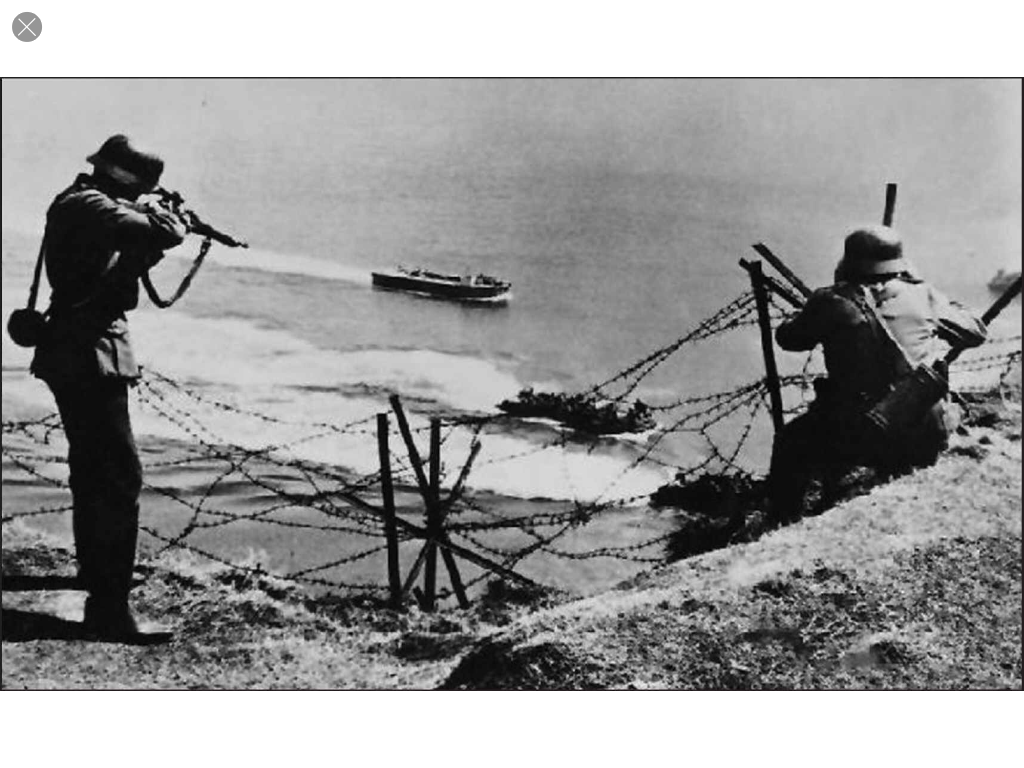
Once the Rangers were established on the cliff top, Goodgal and Crouch went up a ladder.
Rudder told Goodgal to put a flag on the cliff side to protect them from freindly fire. Later he was told to retrieve it and put it on a pole so that it was visible from inland.
Lt Johnson and Christensen, who had landed inside the perimeter of the battery, had been taken prisoner. Lt Johnson had escaped before the Rangers arrived but not Christensen. He was marched off and taken to a POW camp at Limburg in Germany.
When Goodgal had seen the Rangers in their LCAs, they were coming parallel to the coast because they had been going the wrong way. That navigation error meant that they lost 40 minutes. If they had landed at 6:30, they would have captured the battery by 7 then 500 Rangers of the 5th Rangers and companies A and B of the 2nd, would have come in to reinforce them. The navigation mistake led to them having to defend the position for 2 days before reinforcements arrived from Omaha beach.
During the two day battle, USS Harding sent a message to battleship Texas informing them that the Rangers needed ammunition and medical attention.
Ian Gardner wrote the book “Tonight we die as men” on the 3rd battalion 506th. He interviewed Goodgal during the research on the book. Goodgal only reported that he and Crouch were at Point du Hoc. A written report from the Rangers mentions three paratroopers present, one of whom was wounded by shrapnel. So it’s possible that Johnson, after having escaped, went back to join the Rangers. After being wounded he was evacuated with others in a landing craft.
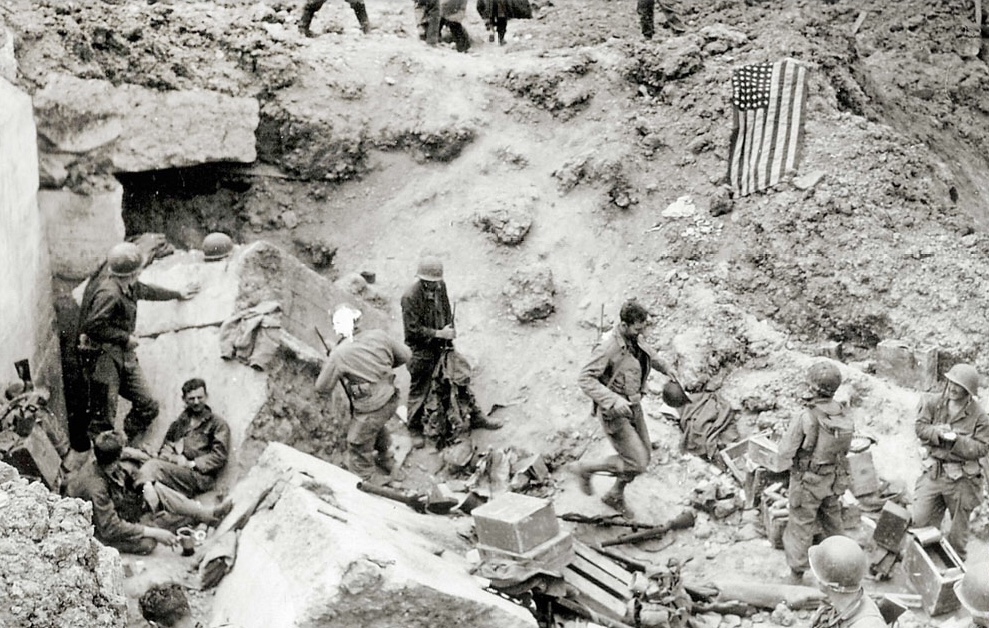
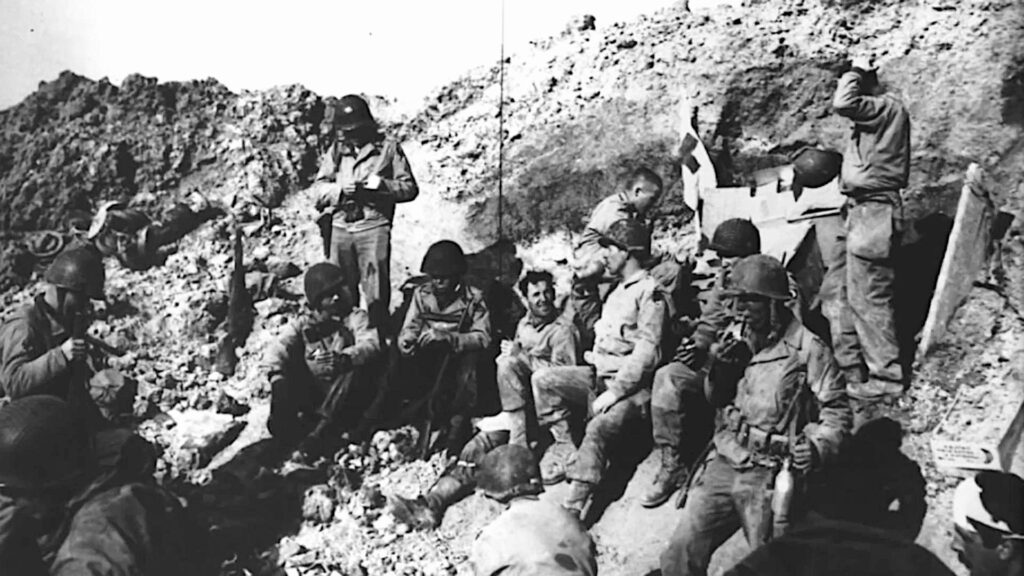
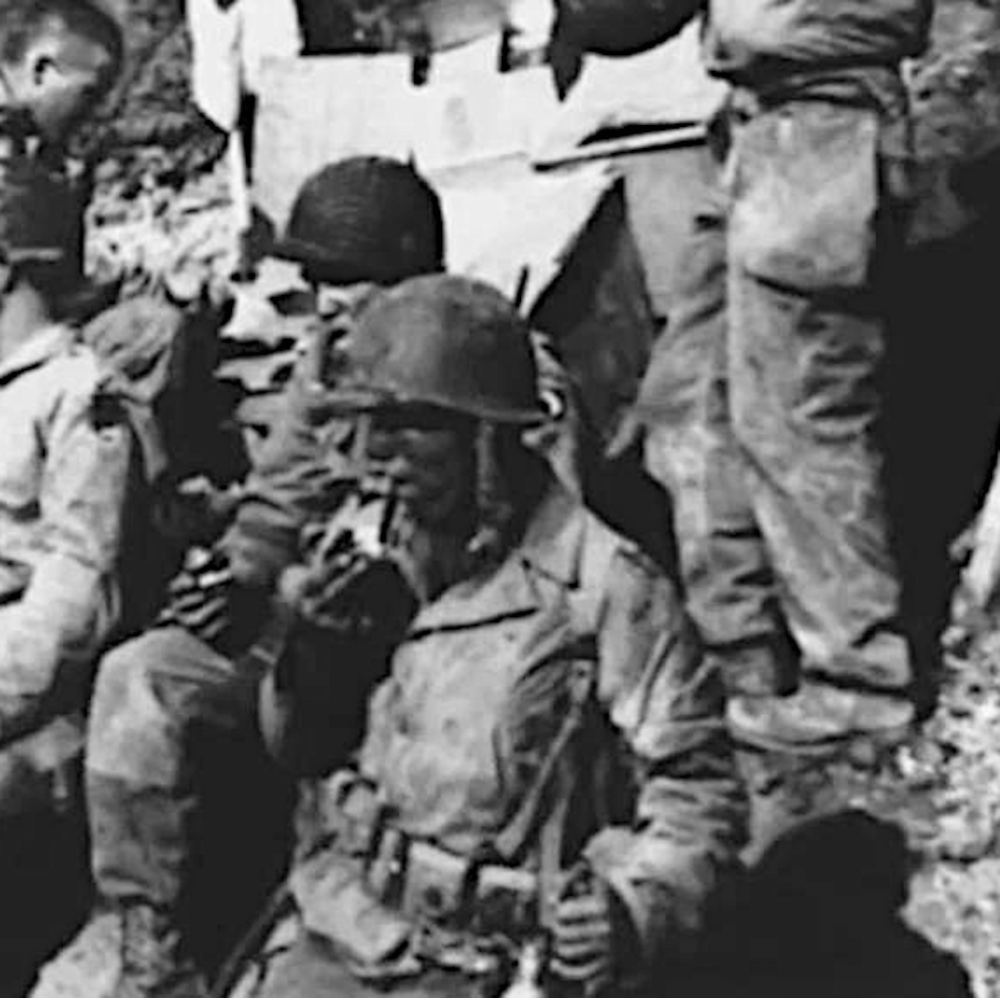
One could be tempted to think this is one of those apocryphal stories of D-day, but there’s photographic evidence. This photo shows a group of Rangers on the slope caused by a bomb hitting the cliff edge drinking coffee that came in from the Texas. Looking closer at the shoulder of the guy with the darker helmet shows the screaming Eagle arm patch. That was Goodgal. The wounded head, bottom right belongs to Col Trevor, the british commando who went in with them.
After being relieved by men of the 29th and 5th battalion Rangers, they moved West and met some other paratroopers on the 9th. On the 11th Goodgal and Crouch were back with I company. Rudder had written a letter for them to explain where they’d been and what they had done recommending them for the Distinguished service cross. Their officers didn’t believe it and laughed.
Goodgal was wounded by shrapnel near Carentan.
Johnson was back with the 506th in Holland and the battle of the bulge. He stayed in the army and retired in 1962.
Christensen was released from the POW camp in 1945. He returned to the states and got married.